Insights from the 2nd edition book launch
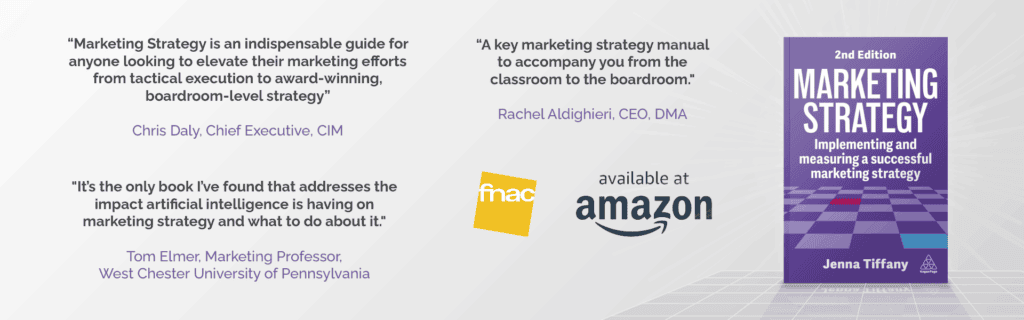
In today’s fast-evolving landscape, the very idea of what constitutes a “marketing strategy” is shifting. The launch of the second edition of Marketing Strategy marks more than just a book release; it underscores a timely dialogue on how businesses need to rethink, refine, and reorient their strategic frameworks. The virtual launch event brought together leading voices in marketing to unpack the shifts, challenges, and immense opportunities brought on by AI and other market disruptions.
From demystifying strategy to navigating inclusivity in an AI-powered world, here are some of the most powerful takeaways from the event.
Strategy vs. Tactics: A necessary clarification
One of the foundational messages that resonated throughout the event was the need to draw a clear line between strategy and tactics. While the allure of shiny new tools and tactical execution often dominates marketing discussions, strategy is about direction, purpose, and alignment.
As author Jenna Tiffany noted, “Strategy is the roadmap to get to your destination. Tactics are the vehicles to get you there.”
James Delves, Head of PR and External Affairs at the Chartered Institute of Marketing, reinforced this by describing strategy as the “North Star” that aligns an organisation with its business needs. Without a clear strategy, organisations risk running in circles, driven by trends rather than purpose.
Why a second edition? The AI tipping point
The original Marketing Strategy book already laid the groundwork for building robust marketing plans. But the game changed with the arrival of AI.
“I wasn’t convinced enough had changed to warrant a new edition,” Tiffany admitted, “until AI came along.”
AI hasn’t just added another tool to the marketer’s kit; it’s fundamentally changed the way we plan, execute, and measure. This edition explores how AI can enhance strategy, if used correctly. The key? Treat it as an enabler, not the strategy itself.
Strategy is a journey, not a one-time destination
Joolz Joseph, marketing consultant and senior lecturer, described strategy as a journey, not a final goal. This thinking reframes strategic planning from a static document to a dynamic process that adapts as the business grows or the market shifts.
“Sometimes you’ve got to be willing to reroute,” Joseph explained. “But stay true to who you are as a business.”
This philosophy was echoed throughout the panel, especially in discussions around trends. Chasing what competitors are doing without alignment to your own values often leads to superficial marketing.
Embrace measured messiness
In a digital world overflowing with polished perfection, there is power in planned imperfection. Inclusive marketing consultant Joyanne Boyce championed the idea of “being messy again.”
“Campaigns that make you think, ‘Did they really do that?’ are memorable,” Boyce said. “Being consistently messy can actually be part of a strong strategy.”
This concept encourages brands to step away from overly controlled narratives and connect more authentically.
Start small, think big
The conversation reminded marketers that even the most iconic brands started small. Referencing examples like Apple and Ben & Jerry’s, the speakers highlighted the importance of starting with a focused offering and building from there.
Joseph’s BED model (Basic, Expected, Differentiator) offers a practical framework for startups and SMEs to identify what they offer, what customers expect, and what makes them stand out.
Segmentation: The core of customer-centric strategy
Segmentation is more than demographics. Jordi van Rijn, email marketing expert, outlined a comprehensive model of segmentation:
- Geographics: Location, language, climate
- Demographics: Age, income, education
- Psychographics: Beliefs, interests, values
- Behavioural: Purchasing habits, engagement
“You don’t need all the data,” he stressed. “Just the most important five data points that help you understand your customer.”
Getting closer to the customer
Boyce pointed out that marketers often overlook the simplest methods of customer research: direct conversation. “Look at your competitors’ comments section. Reach out. Ask questions.”
Social media, intended as a conversational tool, is underused in this respect. Authentic engagement, not automated messages, is what builds understanding and trust.
Content in the age of conversational AI
As more users interact with AI tools like ChatGPT and Google’s Bard, brands must adapt to a more conversational tone in their content.
“Answer the question the way it’s asked,” Boyce advised. “Don’t try to reframe it.”
Joolz Joseph reinforced this by saying AI is a tactical assistant, not a strategic lead. When used wisely, it can enhance the speed and structure of content creation. But without human oversight and ethical framing, the risk of bias or irrelevance grows exponentially.
Inclusivity and AI: A call for conscious use
AI’s potential comes with ethical responsibilities. Boyce highlighted that 70% of people don’t vet AI outputs before publishing. That’s a major risk, particularly when outputs can reinforce bias.
Her advice: stick to AI tools that align with platforms you already use (e.g., Canva, Notion) and always run outputs past diverse voices. Inclusivity must be planned, not performative.
Measurement and the role of AI
“The best tool is your bank account,” van Rijn joked. In truth, measurement should always come back to your objectives.
The group agreed: AI tools can provide summaries and highlight risks, but they must be aligned to the business goals and target outcomes. Choose five key performance indicators that matter most to your business, rather than chasing hundreds of vanity metrics.
Final thoughts: Yes, strategy still matters
Perhaps the most asked question in marketing circles today: do we still need strategy in the age of AI? The panel’s answer was a unanimous yes.
AI is powerful. But without strategic direction, it becomes noise.
To quote one favourite analogy from the day: “AI is like a toddler running a library. It might have access to all the information, but it has no idea what to do with it.” Marketing Strategy 2nd edition shows us that successful marketing doesn’t come from tech alone. It comes from intentional planning, inclusive thinking, customer centricity, and a strong, flexible strategy that guides every decision, even in uncertain times.
About the Book
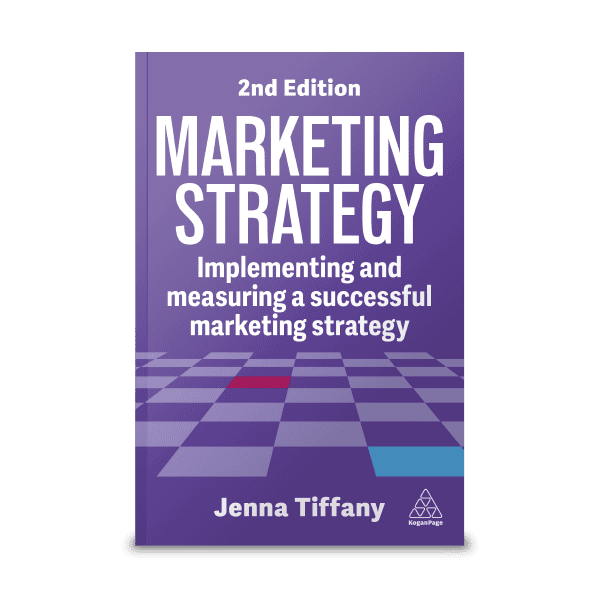
Get the Book: Ready to refine your marketing strategy for the modern era? Grab your copy of Marketing Strategy 2nd Edition and join the conversation. Long live strategy, even in the age of AI.
(This is an affiliate link. By ordering through this link, we will receive a small commission.)